Dr Caroline Carera Sager
FMH specialist in urology
Consultations and tests, in French, Italian and English.
A test is booked, and questions keep going round in your head: will it hurt, how long will it take, how should I prepare? It is normal to wonder, especially when the test concerns an intimate part of the body. This page explains each test carried out at the practice, step by step. Dr Caroline Carera Sager or Dr Johannes Hauser will also explain it to you before starting, and answer your questions.
What the test is for, how it is carried out, what you will feel. You can ask all your questions.
Depending on the test: a full bladder, a review of your medicines. You are given the instructions in advance.
Your urologist tells you before each step. You can ask for a pause at any time.
Some are known straight away, others after analysis. They are always explained to you.
The results are used to decide, with you, on treatment or follow-up.
Most of the tests needed in urology are carried out directly at the practice. This saves you having to attend multiple appointments.
Before the test, let us know about:
Why: to look for infection, blood, sugar or protein in the urine.
What happens: you collect a little urine in a container, on your own, in the toilet. A quick dipstick test (a strip that changes colour) gives an initial result. A microscope examination or a culture (growing any bacteria in the laboratory) may follow.
What you feel: nothing in particular.
How to prepare: ideally, do not pass urine just before your appointment.
Why: to examine the kidneys, bladder, prostate or testicles. It also measures the urine left in the bladder after you have passed urine (the residual volume).
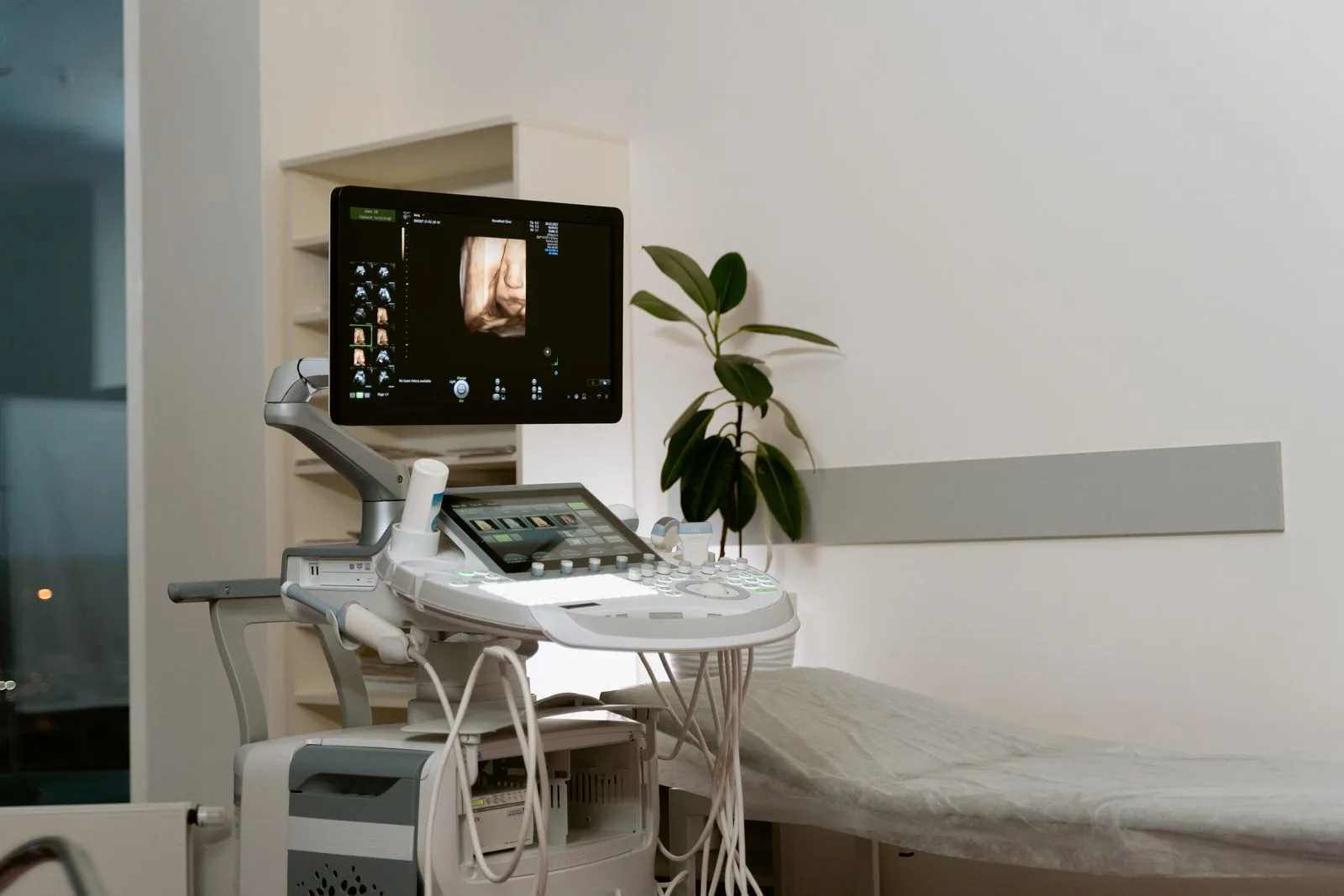
What happens: you lie down. A probe covered with gel is placed on the skin and moved gently. The images appear on a screen, and your urologist can show them to you.
What you feel: the gel is a little cold. The scan is painless and usually takes a few minutes.
How to prepare: you may be asked to come with a full bladder.
Why: to measure the strength and duration of the urine stream, when the stream is weak or you have difficulty passing urine.
What happens: you pass urine on your own, as usual, into a toilet fitted with a sensor. Nobody is in the room. An ultrasound scan then often measures what is left in the bladder.
What you feel: nothing more than an ordinary visit to the toilet. If nerves get in the way, say so: it is common.
How to prepare: arrive with a full bladder, but not bursting.
This is the test people find most daunting. Knowing exactly what will happen often helps you approach it more calmly.
Why: to look inside the urethra (the tube that carries urine out of the body) and the bladder. For example if there is blood in the urine, repeated infections, or for monitoring.
What happens:
What you feel: the test may be uncomfortable, but it is usually well tolerated thanks to the gel. Feeling the need to pass urine during the test is common and normal. The test itself usually lasts a few minutes, without a general anaesthetic.
Afterwards: a slight burning sensation when passing urine is possible for a day or two. Drinking plenty is advisable. You can usually return to your normal activities.
Why: to study how the bladder fills and empties. It is particularly useful in cases of incontinence or difficulty passing urine.
What happens: a thin catheter is placed in the bladder through the natural passages. The bladder is slowly filled with sterile fluid while the pressures are measured. You are asked to describe what you feel: first urge, strong urge, urgent need. Your answers are part of the test.
What you feel: inserting the catheter may be uncomfortable. After that, you mainly feel the bladder filling. The test takes longer than the ones above.
A test that looks for cancer is worrying, which is entirely understandable. A biopsy does not mean that cancer is present: its very purpose is to find out.
Why: to take small samples of the prostate, when cancer is suspected, targeting the areas identified on the MRI.
What happens: the biopsy is carried out at Clinique La Colline, using the UroNav system. The images from the MRI performed beforehand are overlaid in real time on the ultrasound. This guides each sample precisely towards the areas to be analysed. The samples are then sent to the laboratory.
How to prepare: how to manage any anticoagulant treatment is discussed with your doctor in advance.
The results are explained to you at a dedicated consultation. See Prostate cancer screening.
Feeling apprehensive before a test is common. So is waiting anxiously for a result, especially after a biopsy. These feelings are legitimate.
You can talk about them with your urologist, before the test as well as when you receive the results. No question is too small.
You decide who is present, and when.
FMH specialist in urology
FMH urological surgeon