Skip to content

Prostate cancer surgery

Radical prostatectomy involves completely removing the prostate and the seminal vesicles to treat localised prostate cancer. Dr Hauser performs it using da Vinci robotic surgery, a minimally invasive technique in which he has been trained since 2006 at the HUG.
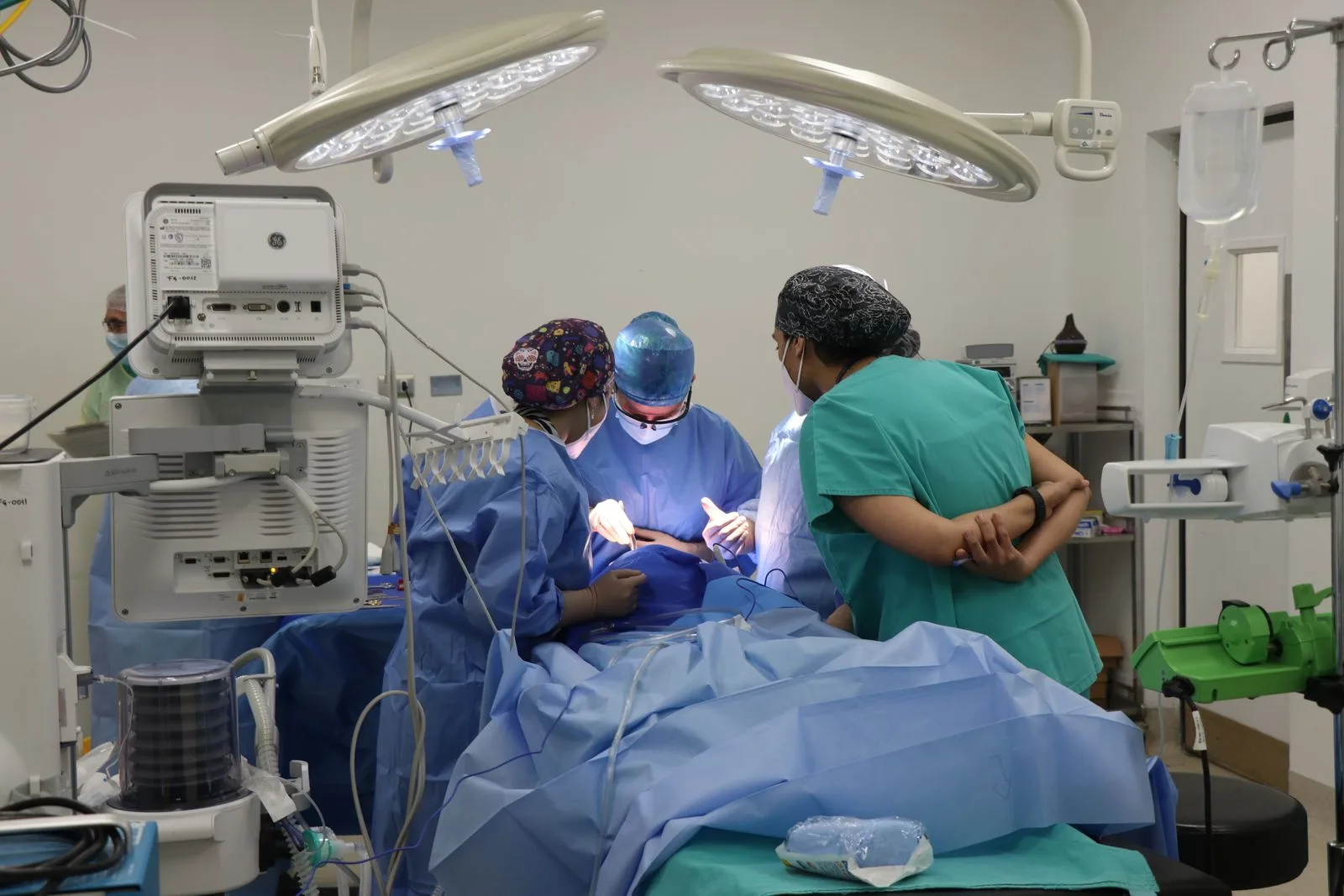
Surgical team in the operating theatre

Who is it for?

It is intended for men with prostate cancer confined to the gland or its immediate surroundings, whose state of health allows them to undergo surgery. Other options exist depending on how aggressive the cancer is and on the patient's age and preferences: active surveillance, radiotherapy or focal therapies.

The decision is made after a full assessment (PSA, MRI, biopsies) and a discussion at a multidisciplinary meeting with oncologists and radiation oncologists, where every case is discussed. Dr Hauser takes the time to talk it through with you and your loved ones.

The procedure

The operation is performed under general anaesthesia and takes about two to three hours. The surgeon operates through five or six small incisions in the abdomen, controlling the robot's articulated arms from a console that provides a magnified three-dimensional view.

The prostate and seminal vesicles are removed, then the bladder is stitched back to the urethra. Depending on the risk level of the cancer, the lymph nodes in the pelvis are also removed (lymph node dissection). When this is possible without compromising cancer treatment, the erectile nerves, located on either side of the prostate, are preserved.

After the operation

  • Hospital stay: usually three nights, sometimes slightly fewer or slightly more.
  • Urinary catheter: left in place for five days while the stitched join heals.
  • Getting back to normal: walking from the next day, office work after three to four weeks, no heavy lifting for six weeks.
  • Rehabilitation: pelvic floor exercises, ideally started with a physiotherapist before the operation, help you regain continence.
  • Results: the microscopic analysis of the prostate is discussed with you about two weeks after the operation.
  • Follow-up: PSA test about six weeks after the operation, then at regular intervals for several years.

Main risks

  • Urine leakage: common after the catheter is removed, it generally decreases over a few weeks to a few months. Lasting incontinence is rare and can be treated.
  • Erectile problems: common at first. Recovery depends on whether the nerves were preserved, on age and on the quality of erections before the operation; it can take up to two years. Treatments exist and are offered early.
  • No ejaculation and infertility: permanent, because the prostate and seminal vesicles produce seminal fluid. Pleasure and orgasm are preserved. Sperm can be banked before the operation if you wish.
  • Risks of any surgery: bleeding, infection, phlebitis or pulmonary embolism (prevented with anticoagulant injections), build-up of lymph after lymph node dissection (lymphocele), narrowing of the join between the bladder and urethra.

Your surgeon

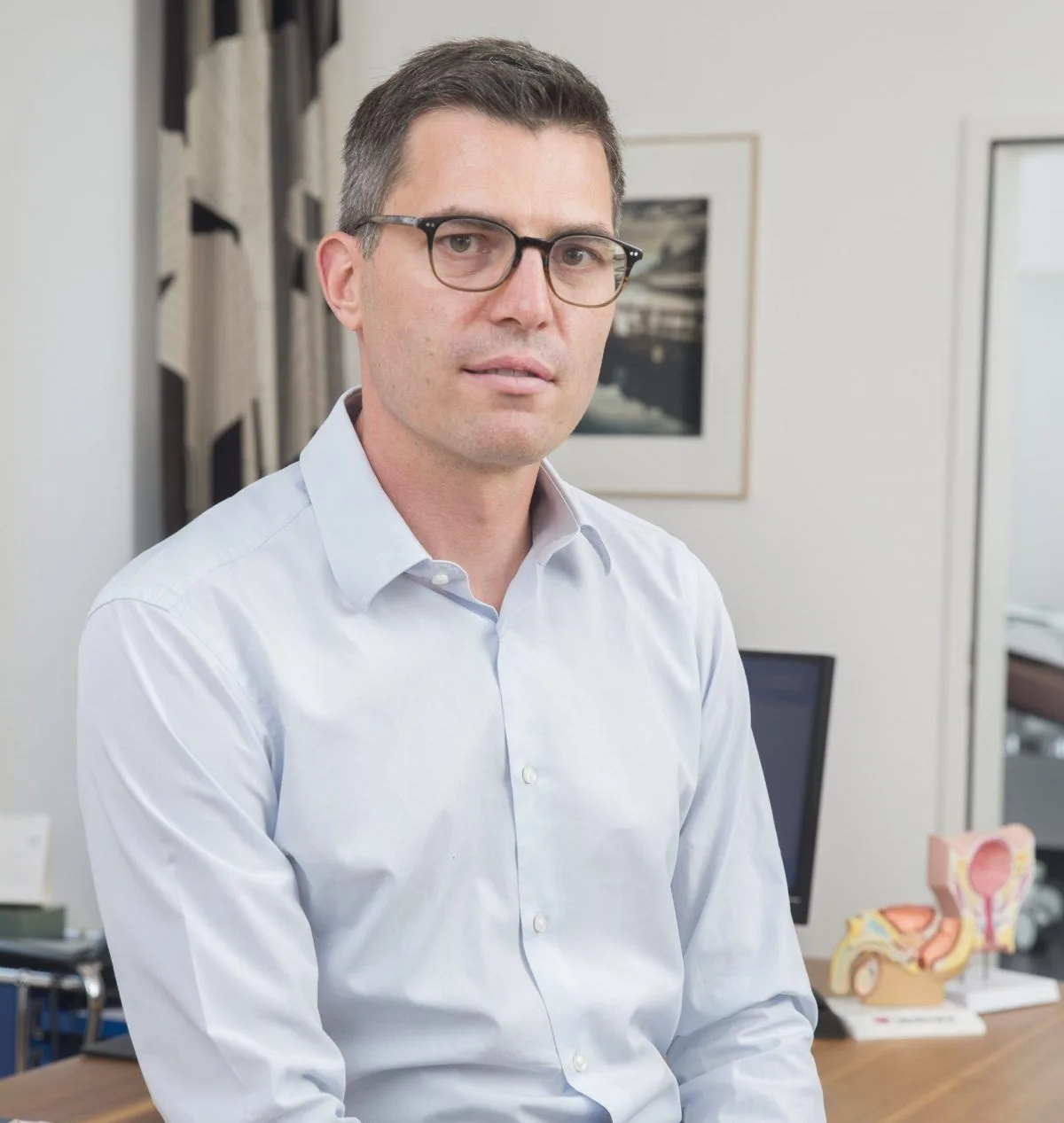
Dr Johannes Hauser, FMH urologist

Dr Johannes Hauser

FMH urological surgeon

Dr Hauser sees you for the consultation, performs the operation and then follows you up. He takes the time to explain each step and to answer your questions, in French, German or English.

His background

+41 22 732 87 57

The initial consultation can also take place with Dr Caroline Carera Sager, FMH urologist.

Frequently asked questions

What is a robot-assisted radical prostatectomy?
It is the complete removal of the prostate and the seminal vesicles, performed through a few small incisions in the abdomen, under general anaesthetic. From a console, the surgeon guides fine instruments and a three-dimensional camera. At the urology practice on boulevard James-Fazy in Geneva, this operation is performed by Dr Johannes Hauser, FMH urological surgeon.
What is life expectancy after removal of the prostate?
This is a legitimate question, and the answer is specific to each person. It depends above all on how aggressive the cancer is and how far it has spread at the time of the operation, on age and on general health. When the cancer is confined to the prostate, the aim of the operation is a cure. No general figure applies to an individual case: your urologist can discuss it with you on the basis of your results.
Can you die of prostate cancer?
Yes, it is possible, especially when the cancer is aggressive or found at an advanced stage. Many prostate cancers, however, progress slowly, and several treatments can control the disease when it is detected while still confined to the prostate. Whether screening is worthwhile is something to discuss with your doctor.
Do continence and erections return after the operation?
Urine leakage and erectile problems are common after a prostatectomy, and these subjects are discussed openly with the urologist. Leakage usually decreases over time and with pelvic floor exercises. The recovery of erections is more variable: it depends in particular on whether the nerves were preserved and on the situation before the operation, and treatments can support it.